Early Orthodontics

January 13th, 2021

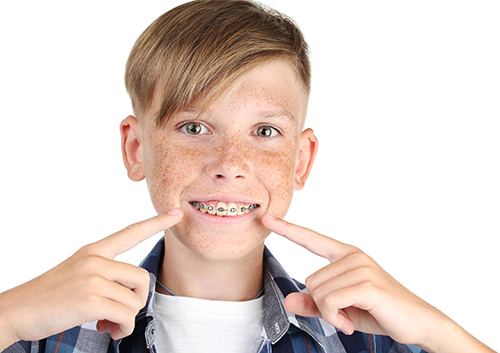
Perhaps you are already planning for the years when your teenager will need orthodontic work. But hearing that your seven-year-old would benefit from orthodontic treatment? That might come as a complete surprise! It’s a recommendation with real benefits, though—early intervention can save children from tooth and bite problems now, and even simplify their future orthodontic care.

Treating young children for orthodontic problems is called “interceptive orthodontics.” When the permanent teeth start arriving, there might be problems with spacing, bite or protruding teeth. Often, treatment while the bones are still growing is the best way to prevent more serious problems later.

We recommend that your child have an orthodontic consultation with Cooper, Ford S. around the age of seven. This exam is especially important for children who may have been thumb suckers or used a pacifier after the age of three, or if you notice obvious teeth, speech or bite issues.

  • Crowding and Spacing Issues

Teeth are arranged in two crescent shapes called arches. When the arch of your child’s mouth is small, the permanent teeth can become very crowded as they erupt. Formerly, teeth were removed to make more room. Now, early use of a palatal expander can enlarge the upper dental arch in order to help the permanent teeth come in without crowding. The need for future tooth extraction is reduced, and there is a better chance for correct spacing and alignment with early treatment.

On the other hand, when a child loses a tooth too soon, too much space left between baby teeth can also be a problem. The remaining teeth can shift, leaving the wrong place open for the adult tooth to come in. We might recommend a space maintainer so that there is no shifting of the teeth and there is room for the proper adult tooth to erupt in its proper spot.

  • Malocclusions (Bite Problems)

Some malocclusions, like a crossbite, can be caused by problems with jaw and facial structure. Again, we might recommend a palatal expander to help the upper arch of the teeth to fit properly with the lower jaw. Problems with overbite, open bite and other bite issues can also be addressed at this age if necessary. Early care can discourage TMJ (temporomandibular joint) disorders, reduce speech problems, and improve facial symmetry. 

  • Protruding Front Teeth

Teeth that protrude are much more likely to be damaged when playing or after a fall. Methods such as braces or appliances can reposition them and protect them from breaking or fracturing.

Many children will not need early intervention, and many can wait until they are older for orthodontic work. But if your young child has orthodontic problems that should be addressed, early intervention can do more than set the stage for successful orthodontics in the teen years. Talk to our Charlotte, NC or Spartanburg, SC team about what we can do for your child. Interceptive orthodontics can protect teeth, guide jaw and speech development, modify harmful oral habits and help to adjust bite problems before they become serious—when it comes to your child’s dental health, the best solutions are early ones!

Let It Snow!

January 6th, 2021

The weather out there might be frightful for most of us, but not for you! You’ve been waiting all year for a fresh coat of powder and all the outdoor sporting activities winter brings. But before you grab those ski poles, strap into that snowboard, lace up those skates, or dust off that sled, be sure to remember one more essential piece of gear—your mouthguard!

Mouthguards aren’t just for contact sports. While all that lovely new snow looks like powder, it doesn’t feel like it when you land hard. If there’s a chance of a fall or an impact in any sport, there’s a chance you can suffer dental injuries.

Falls or collisions can result in chipped, broken, or dislodged teeth. Your mouthguard will help protect your smile from these accidents, and also works to protect you from biting your tongue and mouth in case of impact. It can even reduce the chance of jaw injuries.

Luckily, finding a mouthguard that works for you is even easier than finding the perfect board or the best wax for your skis. You have several options to choose from:

  • Ready-made appliances. These are available in drugstores and sporting goods stores, but come in pre-formed sizes, so they might not provide the best fit.
  • The “boil-and-bite” model. This mouthguard form is placed in hot water. You then bite down while it is pliable to shape it to your mouth and teeth.
  • Custom mouthguards. These guards can be fabricated just for you. They are molded to fit your individual mouth and teeth, so provide a better fit and better protection. They are also usually more durable and more comfortable. If you wear braces, a custom mouthguard can be your best option for preventing an injury to your mouth and your braces. Talk to Cooper, Ford S. if you are interested in a guard fitted specifically for you.

When you visit our Charlotte, NC or Spartanburg, SC office, let’s discuss all the best ways to keep your teeth and mouth protected before you set out for winter sports. And then when you’re ready to go? Let it snow!

New Year's Eve

December 30th, 2020

Watching the clock tick down the final seconds until midnight, many of us- OrthoCare Orthodontics included- feel nostalgic about the passing year and hopeful about the new one to come. New Year’s Eve is one of the most widely celebrated holidays in the world, with over-the-top celebrations taking place in dozens of countries. The Gregorian calendar, which is widely used in Western nations and around the world, was implemented in 1582. Since that time, December 31st has marked the final day of the year, with midnight heralding the beginning of a brand new year. In the United States, New Year’s Day is a public holiday; government offices, schools, public organizations, and many businesses are closed for the day. Ponder the following fun facts as you think about your plans for the holiday:

  • Approximately one billion people watch the New Year’s Eve ball drop in Times Square, New York City. This televised event is one of the most iconic New Year’s celebrations in the world. For many years, watching the ball drop meant tuning in to Dick Clark’s Rockin’ New Year’s Eve, an iconic television special dear to the hearts of many viewers.
  • The idea for the New Year’s Eve ball came about because of a citywide ban on fireworks. Before 1907, when fireworks became illegal in New York City, celebrations included an elaborate fireworks show. The large, glittering, illuminated ball was developed as an alternative. Although the first ball was heavy at 700 pounds, the modern New Year’s Eve ball is made of Waterford crystal and tips the scale at six tons!
  • The top five New Year’s resolutions are: to lose weight, quit smoking, get a new job, return to school, or increase personal savings. However, approximately 88% of New Year’s resolutions fail. But don’t let that discourage you! Resolutions are most likely to succeed when they are clear, achievable goals. Setting out a concrete plan to achieve your resolution also boosts your chances of success.
  • Eating black-eyed peas on New Year’s Day is said to bring good fortune in the new year. Collard greens, cabbage, and ham hocks are also considered lucky foods to enjoy. Just steer clear of the chicken or turkey dinners; eating poultry is a bad omen for the year to come.

Whether you plan to stay in Charlotte, NC or Spartanburg, SC, or head out into the crowds to watch the ball drop in Times Square, New Year’s Eve is a time to enjoy friends and family. Send your loved ones well wishes for the New Year, and look for that special someone to share a midnight kiss with for good luck!

Rubber Band Horoscopes: What your color says about you

December 23rd, 2020

One exciting part about wearing braces from OrthoCare Orthodontics is getting to choose the colors of your rubber bands. Orthodontists place elastic bands, or ligatures, over each bracket to secure the archwire in place. These rubber bands may be individual or connected, depending on your mouth’s needs. From Cooper, Ford S., you have the option of choosing the color of your elastics, which are changed about once every month at every visit. Our offices keep a color wheel handy to help you choose which ones suit you best!

Children and teens often enjoy picking different colors each month to express their creativity and coordinate their braces with outfits. Decorating your mouth with your favorite colors is fun for kids and takes some of the stress out of wearing braces. Adults who wish for subtlety have color options that blend in with the metal brackets and archwire. Common choices for adults include silver, clear, and gray tones.

Common Color Combinations for Rubber Bands

With individual ligatures for each bracket, you may choose different color combinations for special events. You can have alternating colors or place an entire rainbow over your teeth. Here are a few options to consider:

  • School spirit colors
  • Favorite sports team colors
  • Patriotic colors
  • Holiday themes

Some patients choose only one color to match their mood, personality, or favorite outfits. The palette of choices allows you to make bold statements with your braces or go for subtler tones that blend in with the metal structures. Keep in mind that bright colors make your teeth look whiter, while lighter shades, such as yellow and white, may cause your teeth to appear less bright.

What Your Rubber Band Color Says About You

  • Red tones indicate that you are ready for action and take charge of your life with aggressive, forward-thinking steps.
  • Blue tones are calm and relaxing. You are conservative and exhibit integrity when dealing with situations.
  • Green tones represent growth and balance. You are level-headed and look for opportunities to grow emotionally and spiritually.
  • Purple tones attract creative energies. You like to have fun and use your imagination in every aspect of your life.
  • Orange tones indicate that you are optimistic and thrive in social situations where communication is open.
  • Pink is a romantic color that represents a caring personality. You also enjoy having fun with silly games and endless laughter.
Back to Top
Contact Us!
call
Coronavirus Update ×