Breakfast with Braces

March 10th, 2021

Breakfast is called the most important meal of the day for many reasons. Children need to refuel after a long night’s sleep, and studies suggest that school kids who eat a good breakfast have more energy, better attendance and behavior, and even higher test scores than kids who don’t.  

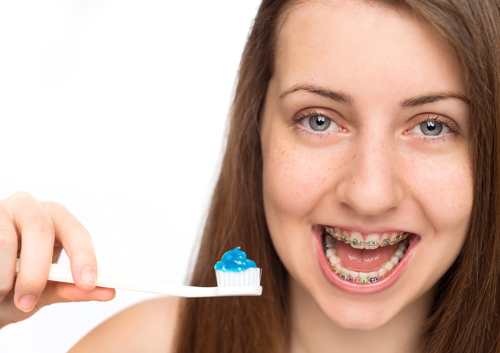
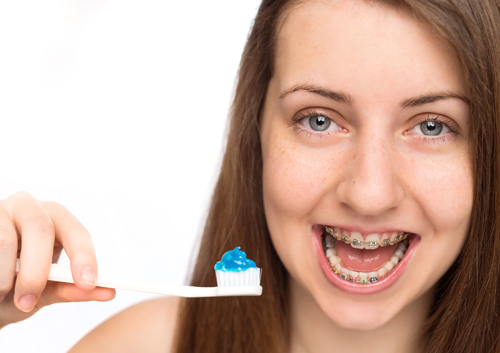
But sometimes, especially with new braces or braces that have just been adjusted, the last thing on your child’s mind is breakfast. Fortunately, Cooper, Ford S. can recommend many early morning options that will be both gentle on braces and healthy for growing bodies!

  • Yogurt

Soft, creamy, and filled with calcium and vitamin D, yogurt is an easy and nutritious choice. Try different fruit flavors or Greek yogurt for variety.

  • Eggs

Packed with protein, scrambled eggs are delicious on their own, or with the addition of cheese or soft veggies. If you’d like to add a bit of flair to the table, a cheese omelet is another great choice. Any egg option is a good one—just remember to skip the crunchy toast on the side.

  • Smoothies

Not only a great way to start your day, but a great way to get vitamins and minerals in one delicious meal. And with a flavor base of banana, mango, berries, or apple, no one will notice if some spinach or kale make their way into the blender!

  • Oatmeal

Unfortunately for the cereal lover, crunchy cereals and even granola are potentially damaging to wires and brackets. But oatmeal is a healthy alternative that can be made even tastier with the addition of soft fruits such as mangos, berries, and bananas.

  • Breads and Pastries

Crunchy and chewy breads and pastries can lead to broken brackets and wires. Soft breads, pancakes, non-crunchy French toast, and soft pastries are much kinder to braces. Because so many of these options are rich in sugar (especially with syrup!), it’s best to go lighter on foods like this and be sure to brush carefully afterward.

  • Fruit

Bananas, peaches, nectarines, berries—if it’s soft, it’s good to go! Cut larger fruits into bite-sized pieces. Dried fruits like raisins, dates, and cranberries can be chewy, sticky, and sugary, so best to take them off the shopping list for the time being.

It’s described as the most important meal of the day for many good reasons. With some of these easy-to-prepare breakfasts, you can add delicious, healthy, and braces-friendly to that description! If you stumble on a delicious recipe, don’t forget to share it the next time you visit our Charlotte, NC or Spartanburg, SC office!

Crushing the Ice-Chewing Habit

March 3rd, 2021

It's a habit many people have and not only can it be annoying to the people around you, it can be detrimental to your dental health. Chewing ice is so common that it even has its own name, pagophagia. We're not talking about a slushy or shaved ice (although those artificially sugary treats should be avoided too!) but more like the hunks of ice rattling around in the bottom of your glass.

Ice chewing can be a sign of emotional problems like stress or obsessive-compulsive disorder, but it can also be a marker for iron deficiency anemia and other physical problems. Then again, some people just like to have something to chew on. For whatever reason you find yourself chewing on it, it's a habit you need to break.

Chewing on ice can cause:

  • Chipped and cracked teeth
  • Damaged enamel
  • Sore jaw muscles
  • Damage to dental work such as crowns, fillings, or other appliances

If chewing on ice is becoming a problem in your life, don’t hesitate to speak with Cooper, Ford S. about it. But if you find yourself still wanting to chew on something, here are a few alternatives to ice:

  • Baby carrots
  • Celery sticks
  • Sugar-free (xylitol) gum

We know you need to chill sometimes, but chomping down your entire glass of ice is not the way to do it. If you have any other questions on the topic, feel free to talk with a member of our Charlotte, NC or Spartanburg, SC team. It may be beneficial in solving the issue and helping to remediate any damage to your teeth.

The Evolution of Braces

February 24th, 2021

Did you know that even in ancient times, people wanted to improve the look and function of their smiles? OrthoCare Orthodontics thinks of modern orthodontic appliances as sleek, efficient technology, but this was not always so! Take a look at the highlights in the evolution of braces.

Ancient Times: From Greece to Rome

  • According to The Angle Orthodontist, Aristotle and Hippocrates first thought about methods for straightening teeth between 400 and 300 BC.
  • The Etruscans, in what we now know as Italy, buried their dead with appliances that maintained spaces and prevented collapse of their teeth and jaws during life. Archaeologists have discovered mummified remains in various locations that have metal bands wrapped around the teeth.
  • A Roman tomb has also been discovered in which the teeth were bound with gold wire, including documentation on the wire’s use as a dental device.

18th Century: A French Development

  • The French dentist Pierre Fauchard is acknowledged as the father of modern dentistry. In 1728 he published a book that described various methods for straightening teeth. Fauchard also used a device known as a “blandeau” to widen the upper palate.
  • Louis Bourdet was another French dentist who published a book in 1754 that discussed tooth alignment. Bourdet further refined the blandeau and was the first dentist to extract bicuspids, or the premolar teeth between canines and molars, for the purpose of reducing tooth crowding.

19th Century: Orthodontics Defined

  • Orthodontics started to become a separate dental specialty during the early 19th century. The first wire crib was used in 1819, marking the beginning of modern orthodontics.
  • During this period, gold, platinum, silver, steel, gum rubber, vulcanite, and occasionally wood, ivory, zinc, and copper were used — as was brass in the form of loops, hooks, spurs, and ligatures.
  • Edward Maynard first used gum elastics in 1843 and E. J. Tucker began making rubber bands for braces in 1850.
  • Norman W. Kingsley published the first paper on modern orthodontics in 1858 and J. N. Farrar was the first dentist to recommend the use of force over timed intervals to straighten teeth.

20th Century: New Materials Abound

  • Edward Angle developed the first classification systems for malocclusions (misaligned teeth) during the early 20th century in the United States, and it is still in use today. Angle founded the American Society of Orthodontia in 1901, which was renamed the American Association of Orthodontists in the 1930s.
  • By the 1960s, gold was universally abandoned in favor of stainless steel.
  • Lingual braces were the “invisible” braces of choice until the early 1980s, when tooth-colored aesthetic brackets made from single-crystal sapphire and ceramics became popular

Today

As we arrive in the present, you need only look at your own braces to see how far we’ve come. Your treatment plan was probably created with a 3D digital model, and we’ve likely used a computerized process to customize your archwires. Perhaps you have clear aligners, self-ligating brackets, or highly resilient ceramic brackets with heat-activated wires.

Orthodontics has come a long way from the days of Aristotle, and even the bulky wrap-around braces of just 60 years ago. Regardless of your specific treatment plan, the development of high-tech materials and methods has made it possible for your orthodontic experience to be as effective, efficient, and comfortable as possible. Call our office in Charlotte, NC or Spartanburg, SC to schedule your first orthodontic consultation!

When is the best age to begin orthodontic treatment?

February 17th, 2021

Most parents know that routine dental care should begin during their child’s toddler years. And many assume they must wait until their child has all of his or her permanent teeth to visit Cooper, Ford S. for an initial orthodontic consultation.

The ideal age for an orthodontic evaluation is age seven. At that age, your child will have a mixture of adult and baby teeth for Cooper, Ford S. and our team at OrthoCare Orthodontics to make a determination about whether any problems are present. Typically the first molars have come in by the time your child turns seven, giving us an opportunity to check for malocclusion, also known as “bad bite.” Also, by the time your child reaches the age of seven, the incisors have begun to come in, and problems such as crowding, deep bites, and open bites can be detected.

When Cooper, Ford S. and our team perform an evaluation on your child at an early age, you get one of two positive outcomes. Although treatment usually will not begin until one to five years after the initial evaluation, it’s still helpful in determining whether your child has any problems with the jaw and teeth early when they are still easy to treat. Earlier treatment can also cost less to correct a potential problem than delayed treatment.

Early evaluation, of course, may signal a need for early treatment. For some children, early treatment can prevent physical and emotional trauma. Aside from spurring years of harmful teasing, misaligned teeth are also prone to injury and are detrimental to good oral hygiene.

If your child is approaching age seven, or has already surpassed his or her seventh birthday, it is time to schedule an appointment for an initial examination at OrthoCare Orthodontics.

Back to Top
Contact Us!
call
Coronavirus Update ×