How Often Should You Brush?

April 26th, 2023

If you’ve been following your dentist’s advice, you know that you should be devoting two minutes twice a day to gentle, thorough brushing, and floss carefully at least once a day. It’s automatic. It’s habit. You’re in the zone. Now that you have braces or aligners, though, it’s time to step up your game!

Removing Food Particles

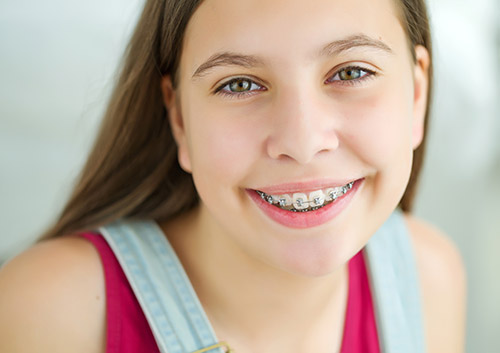
No one wants to worry about food particles stuck in braces right after lunch—or, worse, noticed hours after lunch! Because food tends to stick around brackets and wires, Cooper, Ford S. and our Charlotte, NC or Spartanburg, SC team recommend brushing after a meal. Not only will you be confident in your smile, you’ll be improving your dental health.

But why?

Better Plaque Removal

Plaque is a sticky film containing acid-producing bacteria. These acids lead to weakened enamel and, eventually, cavities. Careful brushing with a fluoride toothpaste helps eliminate plaque. But as you may have discovered, it can be more difficult to clean around brackets and wires. Brushing after eating will help keep plaque from forming on your enamel, and using the right tools (floss made for braces and interproximal brushes) will help clean plaque more effectively.

But what about aligners?

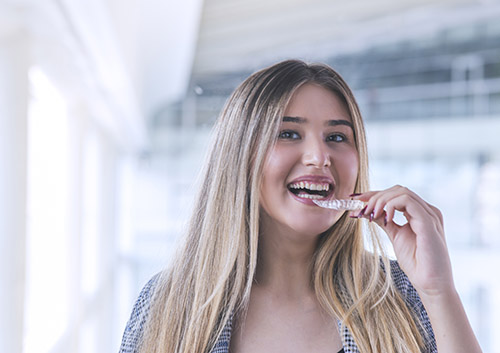
If you wear clear aligners, you take them out when you eat. This avoids the problem of food particles trapped in brackets and difficulty brushing around wires. But this doesn’t mean you are home free. Brushing after every meal is also a good idea when you wear aligners.

Our teeth have an organic way to help remove food particles, acids, and bacteria between brushings—saliva! Your aligners, while covering your teeth, decrease their exposure to saliva. It’s really important, then, to make sure you brush after eating. Otherwise, food particles and acids can remain on your teeth after you replace your aligners, increasing the risk of enamel erosion and decay.

Brushing helps keep your aligners clear as well. If you notice aligner discoloration, this could be the result of food residue such as tomato sauce or coffee that remained on the teeth after a meal. Anything that stains your enamel can stain your aligners. And don’t forget about plaque. Plaque can stick not only to your enamel but to your aligners as well. If you notice that your aligners are cloudy, or have an unpleasant odor, talk to us about the best way to keep them their cleanest.

Make a Plan

So, what can you do to make brushing more convenient during a busy day? Be prepared! Keep a small kit with you containing a travel brush, a small tube of toothpaste, floss, and an interproximal brush for quick cleanings when you’re out and about, and you’ll never have to worry about your smile.

Of course, there are occasions when it’s just not possible to brush. At times like this, whether you have traditional braces or aligners, it’s a good idea to rinse well with water after meals or snacks, and brush as soon as you can.

Start your new dental routine now, and soon it will be automatic. An everyday habit. Your new comfort zone. After all, taking a few extra minutes from your day to brush after every meal will be well worth it when you end your orthodontic treatment with a smile that is as healthy as it is beautiful!

What's the best dental floss?

April 25th, 2023

Dental floss is similar to a lot of products that depend mainly on the consumer’s preference. Fact is, floss comes in a wide variety of flavors, coatings, and other variations, but all types of floss essentially do the same thing. After all, that is what is most important: that the dental floss you buy is functional—cleaning the areas in between your teeth. If you want to know what the best dental floss is, the answer is the kind that enables you to successfully and regularly clean those areas. So to help you find the right type of floss for you, here are some options.

Flavored Dental Floss

Many people that floss prefer a flavored dental floss because it freshens their breath even more than unscented floss. The latter can also take on the smells associated with bacteria in your mouth. And we all know how bad that can be. So, if flavored dental floss is what you prefer, and it allows you to floss your teeth regularly, then it is automatically best for your mouth.

Flossers

There are also products on the market called flossers, which usually consist of a plastic instrument with strung floss and a pick on the opposite end. This option can be both effective at cleaning the areas in between your teeth and scraping off plaque. These flossers also come flavored in mint and various other varieties.

Gentle Dental Floss

Some people find that typical dental floss is too harsh on their gums. For that reason some companies make floss with soft coatings that are less abrasive on the gums. For the most part these types of floss are just as effective as regular floss, and for those people that require a more sensitive approach to flossing, especially when just starting out, this is the best option.

Of the aforementioned options, it is difficult to name an absolute best type of floss. However, Cooper, Ford S. and our team say that the type of floss that works best for you, giving you the greatest chance of succeeding at regular flossing, is the best. For more information on floss, contact our Charlotte, NC or Spartanburg, SC office.

Be Prepared!

April 25th, 2023

When you’re busy at school or work, when you’re on vacation, when you’re on the road to adventure—preparation helps everything go smoothly. Especially when the unexpected happens! So, how can you be prepared for any orthodontic and dental situations which might arise? By creating these useful—and portable—travel kits.

Everyday Basics Kit

Dentists recommend brushing twice a day and flossing at least once each day for clean and healthy teeth. But after a long day at school or work with no time to head home before your date, or a garlic-heavy lunch in the cafeteria, or a dash from the classroom to after-school activities, you might feel like there’s no time like the present to give your smile a bit of a boost.

Be prepared with a small travel bag filled with these easy-to-carry basics to get you through your busy day with clean teeth, fresh breath, and a confident smile:

  • Toothbrush and case—and do make sure your case is ventilated so your brush can air dry. Bacteria love a closed, damp environment!
  • Toothpaste
  • Mini-bottle of mouthwash
  • Small mirror—to check for any lunch leftovers
  • Dental floss—to remove any lunch leftovers. Use braces-friendly dental floss if you have traditional braces.
  • Dental Wax—to cover any uncomfortable wires or brackets
  • Interproximal brushes—to remove food particles from around your braces and between your teeth
  • Extra rubber bands
  • Aligner/Retainer case—keep your aligner or retainer safe and clean while you’re eating

Flight Gear

Getting set to travel by air again after this long lay-over? Your basic kit will do the job with just a few minor additions and alterations.

  • A travel version of your manual or electric toothbrush and travel case
  • Plug adapter or voltage converter as needed for your electric brush if you’re visiting another country
  • Quart size, resealable plastic bag to hold your carry-on supplies. Toothpaste and mouthwash are included in the list of items which need to fit carry-on guidelines.
  • Travel-size toothpaste—3.4 oz (100 ml) or smaller tube size. (And an almost-empty regular size tube doesn’t count!)
  • Travel-size mouthwash—also in a 3.4 oz (100 ml) or smaller container
  • Our Charlotte, NC or Spartanburg, SC office’s phone number. In case of emergency, Cooper, Ford S. can give you advice on how to handle any problem which might arise when you’re far from home.

Looking for Adventure?

If you’re camping in the forest, leaving for the lake, going for a road trip, or heading out on any travel adventure, you’ll be bringing the dental care basics, of course. We’d also like to recommend some items to take along in the event of a dental emergency while you’re away from home:

  • Dental mirror
  • Cotton rolls
  • Over-the-counter pain relief—including a tube of oral pain relief gel
  • Ice pack
  • Dental wax—this handy item not only protects against sharp wires, it can cover the sharp edges of a broken bracket
  • Temporary fillings—to protect your sensitive tooth if a filling or crown is lost
  • Tooth preservation kit—to protect a dislodged tooth in case it can be reimplanted. (This means seeing a dentist very quickly, usually within 30 minutes of the accident.)

And, if you’ll be mountain biking, water skiing, or enjoying any activity where there’s potential for impact, don’t forget to pack your mouthguard!

Preparation is key to eliminating a lot of stress in our daily lives, and who couldn’t use a bit of stress-relief these days? Make room in your bag, locker, desk, luggage, or backpack for some portable, lightweight dental necessities. Be prepared to share your confident, healthy smile no matter what life has in store!

Positive Aging with Orthodontics

April 25th, 2023

Crooked or crowded teeth aren’t always just a cosmetic issue; they also are more difficult to clean, which can lead to tooth decay and gum disease. Likewise, if your teeth don’t align properly when you bite (known as malocclusion), this can cause chewing, swallowing, and speaking problems.

You can put these risks to rest and look amazing, however, with well-thought-out orthodontic treatment from Cooper, Ford S.. More and more adults are opting for orthodontic treatment and changing their lives in the process.

Childhood is of course the ideal time to get treatment, since the mouth and jaws are still growing, but many adults still can get beautiful and lasting results which can be achieved discreetly and effectively with modern orthodontic appliances and technologies.

Traditional braces used to be the only thing going, and many adults understandably don’t like the way they look. There are so many other options for braces these days that it’s possible for almost any patient to be treated effectively and efficiently — usually in one to two years.

Here are some of the technologies being implemented in our modern Charlotte, NC or Spartanburg, SC orthodontic office:

  • Clear aligners: Practically invisible clear plastic aligners are great for less severe cases.
  • Lingual braces: These are placed on the back of your teeth instead of the front, and can handle anything that traditional braces can.
  • Ceramic braces: Translucent ceramic brackets make for effective and more discreet treatment.
  • Self-ligating braces: These require less manipulation by the orthodontist, which means fewer appointments and quicker results.

It should also be noted that the goal of orthodontic treatment (especially in adults) isn’t always limited to straightening teeth and/or correcting a bite. Teeth provide support for the lips and cheeks and help define your face.

The relationship between the jaws, teeth, face, soft tissues, and underlying skeleton of the face are important, and an orthodontist takes this into account when designing a smile.

In short, getting orthodontic treatment won’t just give you a good-looking and healthy smile; it can help define and enhance the entire appearance of your face. Knowing just how crucial your teeth are in determining how you look and live will help you age positively and confidently.

Back to Top
Contact Us!
call
Coronavirus Update ×